Finally, spring has arrived. We’ve survived another Nebraska winter and have done every indoor chore on our “to-do” lists. Our gardening tools are ready; some seeds have already been started in our basement greenhouses. All we’re waiting on is the weather, specifically warmer air and soil temperatures, to launch our season. What else can we do while we wait? Well, now is a good time to build a raised planting bed.
The basic idea of a raised bed is that instead of battling against poor soil conditions, you build above ground, where you have absolute control over the soil texture and ingredients.
Growing in raised beds has many advantages. It can be easier on aging backs and knees, and optimal soil conditions inside a raised bed can easily be maintained. By relegating external areas to the compaction of walking and wheelbarrows, the contained soil stays aerated, thus draining better. Raised beds can be maintained by simply topping with compost or mulch. Another advantage to raised beds is that they extend a gardener's growing season because the walls collect early spring sun and warm up before native soil, giving plants and seeds a jump on the growing season.
There are some key considerations when selecting a site for a raised bed. A flat, level area works best for a raised bed. If there are specific plants you want to grow, make sure you’ve located your bed so it receives the correct amount of sunlight. Having a water source close at hand is important. A raised bed will dry out more quickly due to improved drainage and quality soil so you’ll want to minimize the distance you have to travel with a hose or other irrigation device.
Another important component in selecting the location of the bed is its size. The point of raised bed is to avoid soil compaction, i.e. all weight-bearing activity such as walking, kneeling, and wheelbarrow placement occurs outside the bed boundaries. By not stepping in the bed, soil remains light and fluffy and keeps your plant’s roots happy. If you will have room to work on either side of the bed, a four-foot width is ideal.
When prepping your site, you will want to remove the existing sod. There are two ways to do this. If you want to skip your workout for the day, grab a shovel and dig out the sod and loosen the soil with a shovel or garden fork to a depth of 8 – 12 inches. A less labor-intensive alternative is to lay down newspaper or landscape fabric, effectively smothering the sod.
Raised beds can be constructed from a variety of materials and are a matter of personal preference. Treated lumber should be avoided as it can leach hazardous chemicals. Cedar and redwood will resist rotting and are good alternatives as are stones, cinderblocks, and bricks. Once the frame has been constructed, fill it with a good mixture of quality topsoil, compost and rotted manure to a minimum depth of six inches. To ensure the plants’ roots have ample room to grow, a depth of 8 – 12 inches is ideal. Rake the soil mixture level and you are ready to plant.
Happily, raised bed gardens require very little maintenance. Each spring or fall, it's a good idea to top dress with fresh compost and manure, or if your bed only holds plants for part of the year, go ahead and dig the compost or manure into the top several inches of soil. As with any garden, mulching the top of the soil will help retain moisture and keep minimize weeds growth.
If you have raised beds as part of your landscape or if you build a raised bed this spring, send us a note and let us know about your experience. As always, we love to see pictures of your projects, so we hope you’ll send us those as well.
Happy Planting!
Rachael and Tobias
Tuesday, April 5, 2011


Tuesday, March 1, 2011
One Potato, Two Potatoes, Three Potatoes, FOUR: Planting potatoes indoors
Spring is just around the corner and green thumbs everywhere are getting the itch to get out and dig in the dirt. We can only peruse seed and plant catalogs for so long before the dirt calls our names. What can we do to satisfy the planting craving? We can plant potatoes indoors! This is a great project for the whole family, including those budding gardeners who, by now, are bored with all the usual indoor winter activities. With the exception of the initial cutting of the potato, this is truly a kid-friendly project.
To get started, you’ll need a few simple supplies: a deep pot, some potting soil and, of course, a potato that has begun to sprout.
Cut the potato into sections with one or two eyes (sprouts) each. Make sure each section has enough “meat” with it. The potato will probably be soft, but should not be mushy or rotten. The sprout will use this portion of the potato to feed on until it begins to grow roots.
Fill a deep pot 1/3 full with potting soil; place the potato section atop the soil and cover with three additional inches of soil. Water the potatoes and place them in a warm, sunny area. Soil should be kept at room temperature. The plant will require about 14 hours of sunlight daily so, if you don’t have enough natural light, florescent lighting is a great supplement to natural light. Keep the moisture level consistent. It is possible for a potted potato to suffer from drought which will yield a lumpy spud with a strange texture when cooked.
When the plant is six inches tall, add 2-3 inches of soil. Continue to add soil as the plant grows until the soil level is about 3 inches from the top of the pot.
Once the plants have flowered, the greenery will begin to turn yellow and die back. Stop watering at this point to allow the potatoes to mature. Overwatering at this stage can make the potato mushy.
'Baby' potatoes may be harvested 2-3 weeks after the plant flowers. For larger potatoes, wait 2-3 weeks after the tops of the plants have died back. Using your hands, a small shovel, or a large spoon, carefully turn the tubers up from the dirt. “New” potatoes may be washed and eaten immediately. If you plan to store your potatoes, spread them out, unwashed, across the top of the soil for 2-3 days to allow the skins to thicken.
You should plan on two to three months from planting to harvest so your potatoes may not be ready for Easter but should be a hit for Memorial Day. We’d love to see pictures of your DIY spud projects so please send them in.
Happy Planting!
 |
| Potato foliage peeks through the top soil. |
 |
| Foliage growth is really taking off |
 |
| Foliage has a lot of growing to do before it reaches the top of the planter |
Monday, February 7, 2011
The Importance of Mulching
What is mulch?
 Mulch in itself is material that is spread out over and around the roots of what you have planted. Two types of mulch are organic and inorganic mulch. Organic mulch includes grass clippings, leaves, bark mulch, newspaper and straw like pine straw. Inorganic mulch includes various types of rocks, stones and gravel. The advantage to using organic mulch is that overtime it breaks down and adds nutrients to the soil, thus making the soil richer. However, because it eventually decomposes, organic mulch will need to be replaced from time to time.
Why Use mulch?
 Mulching is one of the most important ways to protect and maintain healthy landscaped plants, shrubs and flowers. Some of the uses for mulch are:
- it prevents weeds from coming through
- organic mulches add to the nutrient base of the soil making the soil richer
- helps to hold water and moisture in your plants and gardens, therefore you don’t have to water as much
- helps the roots maintain an even temperature
- protects your soil from erosion
- adds to the aesthetic appeal of your landscape by making it look more finished
Applying Mulch
 When applying mulch you want to put a layer of it 2-4 inches as close to the roots as possible. Remember to replace the mulch as needed if using organic materials. Make sure you don’t use too much as too much of it will be a bad thing possible causing the roots to suffocate. You also want to make sure you keep any mulch away from tree trunks. Organic mulches are very beneficial but they can wind up being a habitat for insects. Most of these insects will not harm your plants but they may become a nuisance for you. Keep this in mind when using organic mulch close to your house. Pavement ants are known to love bark mulch. If put too close to your house you may have unwanted guests. Some people like to spread out a layer of plastic underneath before they apply mulch. This isn’t a good idea because it dries out the soil underneath defeating the purpose of maintaining proper moisture for the root system. The best time to apply mulch is in late Spring once the ground starts to warm up.
As a final mention on using mulch I can’t emphasize enough how it can improve the aesthetics of your landscape. Whether you use colored bark mulch or beautiful colored rocks, it will really make your yard pop. It is well known that beautifully landscaped yards add to the value of your home.
Article from www.LandscapingIdeasOnline.com

Why Use mulch?

- it prevents weeds from coming through
- organic mulches add to the nutrient base of the soil making the soil richer
- helps to hold water and moisture in your plants and gardens, therefore you don’t have to water as much
- helps the roots maintain an even temperature
- protects your soil from erosion
- adds to the aesthetic appeal of your landscape by making it look more finished
Applying Mulch

As a final mention on using mulch I can’t emphasize enough how it can improve the aesthetics of your landscape. Whether you use colored bark mulch or beautiful colored rocks, it will really make your yard pop. It is well known that beautifully landscaped yards add to the value of your home.
Article from www.LandscapingIdeasOnline.com
Monday, December 27, 2010
Tools of the Trade - Snow Plows
Welcome to our first installment of Tools of the Trade. Periodically throughout the year we will highlight some of the tools that we use in our industry with pics, what it is, what it's used for, the importance of the task that it is used for and any pros/cons versus using a different tool.
If you have any questions about the tools we are highlighting or you would like to see us do an article on a specific tool, please leave a comment and we will answer it.
Not much landscaping going on during this time of the year, however snow removal is in full swing. What better tool to talk about than a snow plow. There are two types of plows that we use- straight blade and v-blade. Both types can be mounted to the front of a truck in about 5 minutes (once the mounting frame is "permanently" attached to the frame of the truck).
 Straight blades are the old trusted stand-by. They are great for clearing large parking lots where you can windrow the snow to one side of the lot or the other. They are also ideal for back-dragging snow away from buildings or residential garages. Some straight blades have a small secondary blade on the back side of the plow to aid in back-dragging. With both straight blades and v-blades you can either get them in the standard steel or polycarbonate material. With the poly blade, you don't have to worry about rusting and they are a little bit lighter.
 Straight blades are also made for larger equipment as well. We have several bigger pieces of machinery that we run either blades or snow pushers on. The snow pusher looks similar to the attachment on the right. It is essentially a box with one side missing. The pusher is great for clearing large sections of parking lots as it holds a lot more snow than a v-blade can.
 The v-blade is a better option for "containing" snow than the traditional straight blade. With the v facing fully to the front you can collect snow and leave less of a trail as you plow. This is ideal when doing final clean-up on a property or when you are needing to clear snow straight from one end to another. The v is very versatile as it can also be used as a straight blade for wind-rowing larger lots. With the v fully retracted back, it works well to make the first pass through a deep snow as it acts just like a cattle pusher on the front of a train. It clears the snow off to both sides of the truck.
 Regardless of the plow used, they are controlled by some type of hand controller inside the vehicle. The two controllers to the right are the two most common for v-blades. It comes down to personal preference on which type snow fighters use. The top one can be mounted to an armrest, center console, or straight to a seat. The bottom picture is one that straps to your hand or when partially dis-assembled can be mounted to your dashboard or leg with a few modifications. If you zoom in on the picture you can see the various functions they control. The control for a straight blade (not shown here) is much simpler. It is typically a small box that can be mounted just about anywhere. It is a small joystick that controls left, right, raise, lower.
This was a very brief run-down on the snow plows that we use. There are many variations of these blades as well as accessories that you can purchase that can aid in snow removal as well. If you have any questions in regards to snow plows, please leave a comment below and we will answer it.
Tuesday, November 9, 2010
Winterize Your Landscape Equipment
The temperatures are getting colder and the days of rain will soon be turning in to days of snow. Time to put away the lawn equipment and pull out the shovels and test out your snow blower. Before you put away your landscape equipment, it is a good idea to winterize them to ensure a longer life and make sure they are ready for your return next spring. Here are some helpful tips/ reminders brought to you by John Fech, a UNL Extension Educator.
Clean and sharpen garden tools before putting them away for winter to minimize rust and ensure that they are ready for use in the spring.
Remove soil, rust and other debris with a wire brush or steel wool. It may be necessary to dissolve accumulated sap and resin on some pruning tools with a solvent, such as kerosene, and to loosen the pivot bolt and separate the blades. Position the tool, using a bench vise or clamp if needed, so you can put the proper bevel on the cutting edge with a flat file or whetstone. Remove any metal burrs from the backside of the cutting edge with 300 grit wet/dry sandpaper when sharpening is completed. Finish with a light application of good quality oil to prevent rusting.
As you prepare your lawn mower and other tools for winter storage, don't forget to winterize your sprayers and fertilizer spreader. Smooth, dependable pesticide application next summer depends largely on the care and maintenance that sprayers and spreaders receive over the winter. Since the "pest season" is about over for this year, this is a good time to winterize your equipment.
Apply oil to the bottom of the hopper and all moving parts. Store the spreader with the shutter or gate fully open.
Compressed air sprayer tanks should be filled one-fourth full with mild dishwashing solution. Shake the sealed tank to loosen any spray residues. Pressurize the tank and spray out the water. Drain the tank upside down until thoroughly dry. Once dry, place a few drops of oil into the top of the pump cylinder. Pump the cylinder several times to coat the cylinder and valves with an oil film. Reassemble the sprayer before storing.
Nozzle tips and screens should be removed and cleaned with soapy water. Clogged nozzle tips should be cleaned with a sliver of wood or other soft object, not with wire. An old toothbrush, properly labeled as being meant for pesticide use and stored with the sprayer, works very well to clean spray residue and other deposits from nozzles. Store nozzle tips and screens in diesel fuel or kerosene to prevent corrosion.
Clean and sharpen garden tools before putting them away for winter to minimize rust and ensure that they are ready for use in the spring.
Remove soil, rust and other debris with a wire brush or steel wool. It may be necessary to dissolve accumulated sap and resin on some pruning tools with a solvent, such as kerosene, and to loosen the pivot bolt and separate the blades. Position the tool, using a bench vise or clamp if needed, so you can put the proper bevel on the cutting edge with a flat file or whetstone. Remove any metal burrs from the backside of the cutting edge with 300 grit wet/dry sandpaper when sharpening is completed. Finish with a light application of good quality oil to prevent rusting.
As you prepare your lawn mower and other tools for winter storage, don't forget to winterize your sprayers and fertilizer spreader. Smooth, dependable pesticide application next summer depends largely on the care and maintenance that sprayers and spreaders receive over the winter. Since the "pest season" is about over for this year, this is a good time to winterize your equipment.
Apply oil to the bottom of the hopper and all moving parts. Store the spreader with the shutter or gate fully open.
Compressed air sprayer tanks should be filled one-fourth full with mild dishwashing solution. Shake the sealed tank to loosen any spray residues. Pressurize the tank and spray out the water. Drain the tank upside down until thoroughly dry. Once dry, place a few drops of oil into the top of the pump cylinder. Pump the cylinder several times to coat the cylinder and valves with an oil film. Reassemble the sprayer before storing.
Nozzle tips and screens should be removed and cleaned with soapy water. Clogged nozzle tips should be cleaned with a sliver of wood or other soft object, not with wire. An old toothbrush, properly labeled as being meant for pesticide use and stored with the sprayer, works very well to clean spray residue and other deposits from nozzles. Store nozzle tips and screens in diesel fuel or kerosene to prevent corrosion.
Sunday, October 31, 2010
Forcing Bulbs Indoors Generates Beautiful Blooms All Winter Long
There are many options for indoor flowering plants throughout the winter. Nearly every bulb variety can be “forced” or tricked into believing it is spring and time for them to shine. Paperwhite narcissus bulbs are great for forcing indoors because unlike many bulbs, they do not require a cold treatment. It usually takes only 3-5 weeks to see blooms from the time they are planted. The fact that they don’t require soil means minimal mess in the house, unless Tobias is “helping.” This is a great project for little ones so don’t hesitate to get them involved.

Like all projects, gathering your supplies and tools ahead of time lays the groundwork for a successful venture. You’ll need a container without a drainage hole, a filler medium, water and, of course, bulbs. That’s it. It can’t get any easier. Are you ready to get started?
Choosing bulbs
Select high-quality bulbs that are free of mold and mildew. For our purposes, we selected paperwhites which require no chilling. Amaryllis is also an option for the following process.
Choosing a container and filler
The ideal container is 3”- 4” deep. While any container without a drainage hole can be used, a glass container is preferred, especially for first timers and children. A glass container allows for easy monitoring of the roots and eliminates any guesswork when it comes to deciding when to move the container.
There are a variety of materials that can be used as filler. Pebbles, crushed rock, marbles, etc. are all good choices. The purpose of the filler is to provide stability and support for the plant as it grows. The filler should be made up of fairly small pieces so that the roots can fill in around them.
 Planting
 Spread 1-1/2” of filler in the bottom of the container. Set the bulbs, pointed side up, in the filler and use the remaining filler medium to support and fill in the gaps around the bulbs. Leave the tips of the bulbs showing above the filler. Add enough water for the water level to reach the bottom of the bulbs.
Storing the plant
For those of you who have been waiting for the “trick” to begin, here it is. You will need to find a dark, cool place for the plant to hang out for a few weeks. The ideal temperature is 55 – 65 degrees F. The plant believes it is winter and will start sending out roots.
It usually takes about 2 to 3 weeks for the roots to begin developing. When you can see the roots and the top of the plant begins to elongate, it is time to move them into the light. Find a sunny spot where the plant will be tricked into thinking spring has sprung. The more sun the better, but remember: the point is for the plant to think it is spring, not summer, so watch out for the temperature. After about one week, you will begin seeing several buds on each stalk.
For those of you who have been waiting for the “trick” to begin, here it is. You will need to find a dark, cool place for the plant to hang out for a few weeks. The ideal temperature is 55 – 65 degrees F. The plant believes it is winter and will start sending out roots.
It usually takes about 2 to 3 weeks for the roots to begin developing. When you can see the roots and the top of the plant begins to elongate, it is time to move them into the light. Find a sunny spot where the plant will be tricked into thinking spring has sprung. The more sun the better, but remember: the point is for the plant to think it is spring, not summer, so watch out for the temperature. After about one week, you will begin seeing several buds on each stalk.

Root development
To prolong the growing season, stagger your planting over several weeks. This will provide you with beautiful plants throughout the winter months. While it is not advisable to mix bulb types in a container, give serious consideration to starting a variety of bulbs to take advantage of the full array of colors these plants can produce.
Once you are comfortable forcing bulbs like paperwhites and amaryllis, consider the other spring beauties: tulips, daffodils, hyacinths and the like. These cold-treatment bulbs require more time and a bit different methodology, but are certainly worth the effort, especially in the dreary, cold winter days of January and February. If you are interested in learning more about forcing cold treatment bulbs, let us know.
We wish you the best of luck with your planting, whatever the season.
Rachael and Tobias
Rachael and Tobias
Tuesday, October 26, 2010
Importance of Cleaning up Leaves
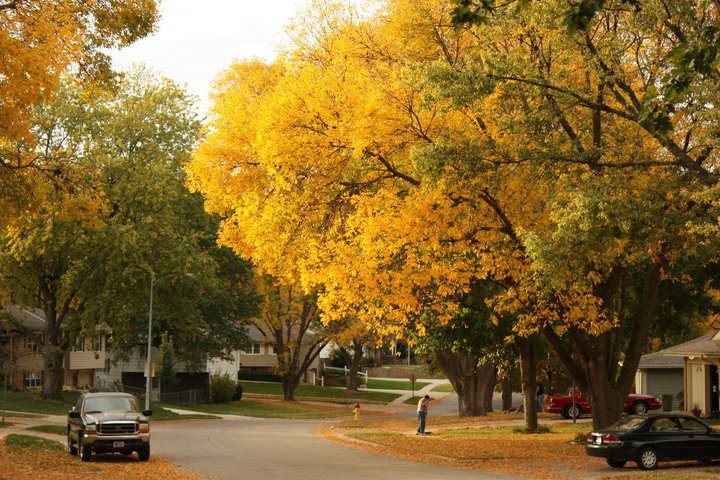
The trees are dropping their leaves and it is important to prevent a heavy layer of leaves from building-up on your turf before winter. Heavy layers of tree leaves that shade the grass can smother and kill grass yet this fall. Plus tree leaf cover favors snow mold, which should still be fresh in our mind from last year's damage. If you choose not to compost them on site, the easiest way to dispose of leaves is to simply mow them in to the turf.
Cool-season turfgrasses require mowing well in to the fall anyway, so regular mowing during the fall will chop the leaves in to small pieces and allow them to filter in to the turf. Research at Purdue and other Midwestern universities shows that tree leaves can be mulched without any detrimental effects on the soil or turf. Actually, just the opposite may be true where tree leaf mulching may help improve the soil and/ or turf.
Not only is mulching leaves with a mower much easier than raking, blowing, and/ or vacuuming the leaves like we have done in the past, other benefits include:
- Minimizes waste in landfills.
- Reduces municipal costs for leaf pick-up and disposal.
- Improved water infiltration in to the soil.
- Helps reduce a source of phosphorus in our surface waters. A number of studies reported total P in urban runoff is highest in fall at the time of leaf drop. Tree leaves moved to the streets could leach phosphorus, which could move in to the storm drains and eventually in to rivers and streams. Keeping them on the turf will allow for better absorption of leached phosphorus.
- May help reduce broadleaf weeds on very low maintenance areas.
Turf iNfo for the North Central US | University of Nebraska – Lincoln turf.unl.edu
Monday, October 18, 2010
Choosing the Right Contractor
There are many questions you may have while looking at a potential project on your property. You have a world of ideas on what you want to do, but may not have an idea of where to start. A quality contractor can help you from your starting idea all the way through completion.
But how do you choose from all of the contractors in your area? There are many steps you go through when figuring out who to hire. You check with friends on who they have used, check the Better Business Bureau, take a look at rating sites like Yelp or Angie's List, you may even post the question to all of your friends on Facebook. Regardless of how you get your information, you still have a decision to make.
There are several things to keep in mind before making your final decision.
But how do you choose from all of the contractors in your area? There are many steps you go through when figuring out who to hire. You check with friends on who they have used, check the Better Business Bureau, take a look at rating sites like Yelp or Angie's List, you may even post the question to all of your friends on Facebook. Regardless of how you get your information, you still have a decision to make.
There are several things to keep in mind before making your final decision.
- Do they comply with state and local codes and regulations.
- Do they have the proper certification for the work they are doing.
- A quality contractor does not offer price as the only consideration. Often times the cheapest in the short run is not the cheapest in the long run.
- Check out references and/or portfolio.
- Ask if any sub-contractors will be used and what work they will be doing.
- Are they insured.
- Check with local building supply retailers. An established contractor with a reputation for using quality materials and paying his bills with suppliers is more likely to do quality work for you. If need be, during the interview process, ask where they get their supplies from.
- How many projects like yours have the completed in the last year. This will help determine how familiar they are with the type of work your project requires.
- Do they listen to you and your ideas or are they pushing theirs on to you. It is your home and your investment and you want to be happy with the final project.
- Get the final agreement/ plan in writing.
Choosing the right contractor is not always an easy process, but it is the most important step in your project. When you choose the right contractor you have peace of mind that your project will be done on time and that you will have quality workmanship that will last for years to come. Remember that price isn't the only factor to consider. If a project is done too cheap you will have to re-invest money again to get things fixed. And believe it or not, this can be as soon as 1 year down the road.
Remember, this is your project! Your satisfaction is the most important thing!
Sunday, October 3, 2010
Planting Spring-blooming Bulbs - A Fall Tradition
Tobias and I just love fall! The weather is so welcome after the heat and humidity of summer and the colors, textures and aromas of the season are so fabulous. We know winter is coming so you want to make the most of every minute we can spend outdoors now.
One of our favorite things to do this time of year is plan our spring landscape beds. Tobias doesn’t care too much about which colors or specific plants I select at the garden center as long as he gets to help with the digging and the occasional batting around of a bulb!
A word to the wise about shopping for bulbs: if you’re not exactly sure what you want, take your time and read the bulb labels carefully. They contain all the information you need to determine how many bulbs you’ll need, how to plant the bulbs, what you can expect as far as the size of the plants and blooms and when the specific plants will bloom. Tobias suggests wearing comfortable shoes for walking up and down the aisles at the garden center.
Are you ready to get started? Here we go.
Bulb selection
Purchasing high quality bulbs will help to ensure future numbers and size of blooms. While top quality tulip and hyacinth bulbs are usually desirable, smaller bulbs will usually suffice for snowdrops and daffodils which easily grow and multiply each year. It is important to choose healthy, fresh bulbs.
Site selection
Most bulbs require 6-8 hours of sun per day in order to make enough nutrients to grow, make it through the winter, and flower the following spring. However, if you planning on planting new bulbs each fall, your site options increase. This is because in early spring when the foliage of the bulbs begins to emerge, there are few leaves on trees to provide shade; therefore, any bulbs that are planted under deciduous trees or in shady areas will receive enough sun in order to bloom satisfactorily for the first spring. Snowdrops and winter aconite are the first to show up in the spring, usually in March. These are soon followed by crocus, scilla, and chionodoxa. These are followed by the hyacinths, daffodils, and tulips. Bulbs are usually sold with a label that will give information on bloom time, bloom size, and hardiness.
Soil preparation
Properly preparing the soil for bulb planting is important. Good soil drainage is essential in raising  bulbs. If you have a soil with a high clay content, it can be improved by adding compost, peat moss or some other source of organic material. The organic material should be worked in the top twelve inches of soil. A fertilizer specifically formulated for bulbs can be applied according to label instructions at the time of planting. The fertilizer should have a high amount of phosphorous. Bone meal is a great organic source of phosphorous but should be avoided in areas where skunks and rodents may be tempted to dig up the bulbs in their search for the “buried bones”. Having the right amount of nutrients available to the bulbs this time of year is important because the roots of the bulbs will still be growing and absorbing nutrients through November and sometimes even into December.
 bulbs. If you have a soil with a high clay content, it can be improved by adding compost, peat moss or some other source of organic material. The organic material should be worked in the top twelve inches of soil. A fertilizer specifically formulated for bulbs can be applied according to label instructions at the time of planting. The fertilizer should have a high amount of phosphorous. Bone meal is a great organic source of phosphorous but should be avoided in areas where skunks and rodents may be tempted to dig up the bulbs in their search for the “buried bones”. Having the right amount of nutrients available to the bulbs this time of year is important because the roots of the bulbs will still be growing and absorbing nutrients through November and sometimes even into December.
Planting

Again, the bulbs’ label should have all the information you need as far as planting depth, which end faces up, and how tall the plant will be.
Spring care
Any fertilizing should be avoided in the spring while the bulbs are in bloom, as this can shorten the bloom time.
So, are you ready to go dig in the dirt? Don’t forget to get your tools in proper order. A small shovel
 will work just fine or, you can pick up a handy bulb-planting tool at the garden center. Tobias is a firm believer in stretching before and during bulb planting (and just about any other time as well). You might find yourself in an uncomfortable position while planting so do remember to stretch and protect your back and leg muscles.
 Have fun with your bulb planting project. This is a great project that can involve the entire family. Don’t forget to send us a note and let us know how it goes for you. We’d love to see pictures of landscape beds now and again next spring when you’ll be enjoying the fruits of your labor.
Happy Planting!
Rachael and Tobias
Rachael and Tobias
Tuesday, September 21, 2010
Divide and Conquer - 5 Easy steps to dividing and transplanting peonies
September - the harbinger of fall. The chores start to add up while the days get shorter and cooler. It is time to start cleaning out landscapes and cutting back fading summer plants. It is also the time to give your peonies some attention. Labor Day is the signal that it is time to cut back peonies for the year. Did you know the peony is one of the few perennials that actually prefer to be transplanted and divided in the fall? Not to be confused with daylilies and hostas that perform better when transplanted in the spring, transplanting peonies just after Labor Day is usually the ideal time to complete this task.
There are several reasons for dividing and transplanting peonies. Peonies prefer a good amount of sun, but can tolerate some shade. If the peony’s location is heavily shaded by a tree or large shrub, the flowering can be reduced. Transplanting the peony to a spot with more sunlight will increase flowering. Another reason to transplant and divide peonies is overcrowding. Sometimes older, more established peonies can become overcrowded and as a result will produce fewer flowers. Dividing the peony will refresh and invigorate the plant.
After the stems have been cut to near ground level, begin digging around the plant. It is best to dig straight down, about 6 inches from the plant using a sharp spade or shovel. If you are transplanting the entire plant, make a few passes around it, digging deeper with each pass (to about 14 inches) and at more of an angle. If you are dividing the plant, determine how much of the plant is to be removed and dig through the plant, segmenting the portion to be divided.
 It is time to start cleaning out landscapes and cutting back fading summer plants. It is also the time to give your peonies some attention. Labor Day is the signal that it is time to cut back peonies for the year. Did you know the peony is one of the few perennials that actually prefer to be transplanted and divided in the fall? Not to be confused with daylilies and hostas that perform better when transplanted in the spring, transplanting peonies just after Labor Day is usually the ideal time to complete this task.
There are several reasons for dividing and transplanting peonies. Peonies prefer a good amount of sun, but can tolerate some shade. If the peony’s location is heavily shaded by a tree or large shrub, the flowering can be reduced. Transplanting the peony to a spot with more sunlight will increase flowering. Another reason to transplant and divide peonies is overcrowding. Sometimes older, more established peonies can become overcrowded and as a result will produce fewer flowers. Dividing the peony will refresh and invigorate the plant.
After the stems have been cut to near ground level, begin digging around the plant. It is best to dig
 straight down, about 6 inches from the plant using a sharp spade or shovel. If you are transplanting the entire plant, make a few passes around it, digging deeper with each pass (to about 14 inches) and at more of an angle. If you are dividing the plant, determine how much of the plant is to be removed and dig through the plant, segmenting the portion to be divided.
 Now you are ready to begin prying the plant upward. It is normal hearthe snapping of the roots at this point. After all roots have been cut or snapped off, the plant can be lifted out of the hole with a shovel and carefully turned over so that it rests on its stems
Carefully loosen and remove as much soil as possible by either rinsing with water or using a sharp  stick or screwdriver. If you have an assistant like Tobias, the paws come in handy for this step! Once soil has been removed, the plant can be cut and divided into sections with at least 5 “eyes” each. The eyes are the small pink nodes along the roots that are the stem buds for the next season’s growth.
Each section is now ready to be planted. Dig a hole that is slightly larger than the root mass to be planted. (This is another task that Tobias is quite helpful with!) At the end of this step, the eyes should be planted at a depth of just 1-2 inches below soil level. If they are planted too deep they will fail to bloom for a few years. Peonies prefer well drained soil that is rich in organic matter. Adding peat moss or compost to the soil that is removed during this step is a good idea, but is not required. Place the root mass in the hole and begin to backfill the soil. Once the eyes are covered with soil, add a 1-2 inch layer of mulch to protect the plant from extreme freezing and thawing through the winter. In the spring the mulch can be removed after the threat of a hard freeze has passed.
Even if the peony is planted at the correct depth, poor flowering should be expected for the first year. After two seasons the plant should be back to full flowering potential.
Love peonies, but disappointed in the short bloom period? Tobias suggests planting several different varieties of peonies. Selecting early and late season peonies can lengthen the bloom period to about 6 weeks!
Now that your peonies have been put to bed for the season, it is time to start thinking about bulb planting. Be sure to check back in October for more on planting tulips and other spring-blooming bulbs. Tobias can't wait to dig in the dirt!
Happy Gardening!
Rachael
Tuesday, August 17, 2010
Wanted: Experienced Irrigation Technician
CM's is looking for an experienced Irrigation Technician for immediate employment.
Irrigation Technicians are responsible for trouble shooting and repairing commercial and residential sprinkler systems; performing spring and fall seasonal services; and, on occasion, assisting with the installation of irrigation systems.
Applications are taken by appointment. To qualify, individuals must have a minimum of 2 years irrigation experience, have a valid driver's license and be insurable under the terms and conditions of the company's insurance policy.
CM's offers a competitive compensation package including medical and dental experience, a simple IRA and paid time off. The starting rate of pay is $11-$16/hour, commensurate with experience.
If you or someone you know meets the minimum requirements, please email your resume and salary requirement to hr@cmscustomlawn.com.
Irrigation Technicians are responsible for trouble shooting and repairing commercial and residential sprinkler systems; performing spring and fall seasonal services; and, on occasion, assisting with the installation of irrigation systems.
Applications are taken by appointment. To qualify, individuals must have a minimum of 2 years irrigation experience, have a valid driver's license and be insurable under the terms and conditions of the company's insurance policy.
CM's offers a competitive compensation package including medical and dental experience, a simple IRA and paid time off. The starting rate of pay is $11-$16/hour, commensurate with experience.
If you or someone you know meets the minimum requirements, please email your resume and salary requirement to hr@cmscustomlawn.com.
Tuesday, August 3, 2010
Selecting New Plants: How to keep from going crazy at the garden center.
Rare is the season when I don’t find myself considering making changes to my landscape. Sometimes it is out of necessity – Mother Nature or the neighborhood pests have a hand (or teeth!) in it. Other times, I may want to change just a plant or two to give my landscape a fresh look. So, off I go to my neighborhood garden center, looking for something to fit a specific spot. Sound familiar?
But wait! Before you grab your keys, you might want to take some time to consider some key elements. You need to know the correct plant size to fill the space. You also need to know how much sunlight the space receives on a daily basis. You also want to be aware of the existing plant colors – foliage and blossoms – to make sure your new plant will complement the existing landscape.
When deciding what size of plant you need to fill a space, it can be helpful to use objects to help visualize what the landscape will look like after the plant is installed and as it matures. Any object will work, so get creative. Items such as a trash can, cardboard box, or empty pot will all do the trick. Tobias likes to use a mouse, ground squirrel, or fish, but those would be for a very small spot. Once you find an object that has the right size, take those measurements with you to the garden center.
How much sun does the plant need? Light requirements are usually listed as full sun, part sun, part shade, or full shade. Their general guidelines are:
* Full sun: At least 6 hours of direct sunlight.
* Part sun: 3-6 hours of sun.
* Part shade: 3-6 hours of shade. These plants will require shade in the afternoon to protect from the intense late day sun.
* Full shade: Less than 3 hours of direct sunlight with dappled shade the rest of the day. This is Tobias’ favorite. Keep in mind that full shade does not mean zero sun exposure. There aren’t many plants that can survive in complete darkness.
Once you have the information about size and light, start reading plant tags. You’ll find the tags have a wealth of information about the specific plant. Most will not only give you the size and light requirements, but will also provide planting instructions and include a picture of the plant so you’ll have an idea of what to expect once it matures.
A cautionary tale: Some information on plant labels may be slightly misleading because the labels are not made specifically for Nebraska. For example, a rhododendron may be listed as full sun because in certain climates it needs full sun, but in Nebraska it needs afternoon shade to protect it from the intense Midwest summer sun. If you have any questions on sun requirements, a garden center employee should be able to help.
Don’t hesitate to forego a plant once in awhile. While you’re at the garden center, take a look around at the garden art. Sculptures, chimes, metal art and the like can add a great deal to a space. Perhaps a trip to the hard goods yard is in order. There you’ll find boulders of all shapes and sizes, many of which can easily be transformed into a bubbling water feature. If you love the hunt and are patient, you might search for a beautiful old bench at antique stores or estate sales.
There are lots of ways to fill in a landscape bed. We hope you enjoy exploring the options throughout the seasons.
Happy shopping!
Rachael and Tobias
Tuesday, June 29, 2010
Growing beautiful roses - no need to get stuck!
 Who doesn't like beautiful roses? There are colors and varieties of roses to suit everyone's color pallettes and size requirements. However, like Tobias, roses prefer a nice sunny spot to hang out. The location should be in full sun for at least 5-6 hours for best results. If your planting bed is shaded, a rose garden is probably not in your future. Sadly, you may need to get your rose fix at your local florist's shop.
When pruning Hybrid Teas, prune back to the first set of five leaves, preferably to an outer facing bud. The outer facing bud will encourage outward growth and ensure proper air circulation. Any diseased or dying canes should also be removed.
Tobias suggests a site where the water will drain properly because neither cats nor roses like wet feet! Low lying areas where water collects should be avoided.
Fertilize regularly. A 5-10-5 fertilizer is preferred. Two to three applications should be made during the growing season. Apply fertilizer in the spring, as the buds begin to swell. The second application should be made in June. The third application, weather permitting, should be made in mid-August. If weather continues to be hot and dry through the end of August, skip the third application to avoid new growth that will not have time to harden off before the first freeze.
Mulch! Mulch will help to conserve moisture and keep the roots cool while minimizing weed growth.
Above all, Tobias and I remind you to stop and smell the roses!
Rachael
Friday, May 28, 2010
Pruning an Unruly Lilac
Rachael's been so busy lately that I thought I'd give her a little break this month and tell you a little bit about pruning lilacs. Time is of the essence with these beauties. The health and vigor of a lilac depends on regular maintenance of the shrub. Regular pruning an care encourage a good overall shape and prolific blooms. If your lilac has been neglected for many years, the process of regaining control will take a few seasons to complete, but is certainly do-able.
It is important to prune the lilac as the blooms begin to fade. The next season's buds are set almost immediately after blooming. By pruning as the current season's blooms are fading, you can avoid pruning off next season's flowers.
Essential tools for lilac pruning are loppers and hand pruners. Before making your first cut, make sure all blades are sharp and clean to avoid spreading disease. Remember to always wear your safety glasses when pruning. It is easy to get poked in the eye when examining and pruning shrubs.
Start by removing 1/3 of the oldest, largest canes by pruning them all the way to the ground. You may not need to remove 1/3 of the plant every year. the goal is to have 8-12 stems of various ages, but all stems should be about 1"- 2" in diameter. Remove all pencil-thin, weak stems.
Remove any branches that are rubbing against each other or are rubbing against a fence or structure. rubbing causes open sores on the branch, making the shrub susceptible to insects and disease.
Another step in the pruning process is deadheading. While deadheading spent blossoms can be very helpful for younger shrubs, it is not necessary for older, larger shrubs. Not to mention, it is nearly impossible to remove every spent flower head on a mature lilac!
Time is limited but lilac pruning can still be done this season. If you have any questions on pruning lilacs or would like us to tackle your overgrown lilac for you, give us a call today.
Well, that's it for now. Stay tuned for more DIY posts from CM's!
Tobias and Rachael
It is important to prune the lilac as the blooms begin to fade. The next season's buds are set almost immediately after blooming. By pruning as the current season's blooms are fading, you can avoid pruning off next season's flowers.
Essential tools for lilac pruning are loppers and hand pruners. Before making your first cut, make sure all blades are sharp and clean to avoid spreading disease. Remember to always wear your safety glasses when pruning. It is easy to get poked in the eye when examining and pruning shrubs.
Start by removing 1/3 of the oldest, largest canes by pruning them all the way to the ground. You may not need to remove 1/3 of the plant every year. the goal is to have 8-12 stems of various ages, but all stems should be about 1"- 2" in diameter. Remove all pencil-thin, weak stems.
Remove any branches that are rubbing against each other or are rubbing against a fence or structure. rubbing causes open sores on the branch, making the shrub susceptible to insects and disease.
Another step in the pruning process is deadheading. While deadheading spent blossoms can be very helpful for younger shrubs, it is not necessary for older, larger shrubs. Not to mention, it is nearly impossible to remove every spent flower head on a mature lilac!
Time is limited but lilac pruning can still be done this season. If you have any questions on pruning lilacs or would like us to tackle your overgrown lilac for you, give us a call today.
Well, that's it for now. Stay tuned for more DIY posts from CM's!
Tobias and Rachael
Tuesday, May 11, 2010
Leaf Miner

Today we welcome our neighbor Leaf Miner to the blog. Good Morning Leaf Miner! Who exactly is Leaf Miner? Where can you find him?
We are so glad you asked. Leaf Miner can be found on Hawthorn trees. Adults emerge from the soil in early May and sting the leaf, laying eggs as they do. The eggs then hatch, and the caterpillars that you see here(look for the backwards "c"), eat between the layers of leaves! You can see the damage they do below. When they are finished, they cut through the leaves, pupate in the soil, and overwinter as moths in the soil. As you have already guessed, they remain there until May when they start the process over.
What can you do? You can treat with acephate now or in the fall with an imidacloprid soil drench.

We will be back soon with some more do it yourself tips!
Thursday, April 29, 2010
DIY: Container Gardening
Nebraska's frost-free date is right around the corner. Do you have May 10 circled on your calendar? Tobias and I can't wait to get started on our container garden.
Container gardening is the perfect solution for people with limited planting space or mobility issues. Container gardens can add a wonderful splash of color to an outdoor living space, make an entryway more inviting and provide fresh herbs for the kitchen.
Are you ready to get started?
Consider the size of the plants in relation to the size of your pot. It is important to leave a little bit of growing room. Most annuals will come with a tag that will have the mature height and width of the plant. This information is very helpful when planning your design. Different heights and textures will add interest and depth to your pots. Tobias prefers the large foliage plants, while I tend to go for the flowers, but a nice combination of both foliage and flowers makes for a design appealing to the eye.
Water and fertilizer are the keys to healthy, continuously blooming containers. When a plant is blooming, it is using an incredible amount of energy and nutrients to produce those flowers. However, when a plant doesn’t get enough moisture it goes into survival mode, which usually means dropping its blooms to conserve energy. Fertilizing your plants will provide them with the nutrients they need to keep flowering. There are many different fertilizers on the market and most people have a favorite. I have had great success with organic fertilizers. I look for organic fertilizers made specifically to increase blooms. It is important to read and follow the directions on the package. I like to find a fertilizer that can be applied weekly. I then alternate fertilizer and root starter once per week. Root starter can be found in the fertilizer section. With this schedule, you are supporting both top and root growth for a healthy, vigorous plant.
Removing spent blossoms (sometimes known as dead-heading) will also help your annuals keep flowering. When a blossom is done flowering, the plant actually uses a considerable amount of energy to get rid of the flower. By removing the spent flowers, the plant can use the energy to grow and to put on new blooms. This is more important for some annuals than for others. Geraniums will benefit from dead-heading more than a plant with small flowers like Lobelia.
Tobias and I hope you enjoy container gardening as much as we do. You can get more information on container gardening AND see a picture of Tobias and one of his pals in the May newsletter, so go to our website http://www.cmscustomlawn.com and check it out. Better yet, if you don’t already receive our newsletter, you can subscribe right from our website's home page.
We’d love to see pictures of your projects. Feel free to send them to us at remonico@cmscustomlawn.com. Until the next time, happy gardening!
Rachael and Tobias (Meow!)
Container gardening is the perfect solution for people with limited planting space or mobility issues. Container gardens can add a wonderful splash of color to an outdoor living space, make an entryway more inviting and provide fresh herbs for the kitchen.
Are you ready to get started?
Consider the size of the plants in relation to the size of your pot. It is important to leave a little bit of growing room. Most annuals will come with a tag that will have the mature height and width of the plant. This information is very helpful when planning your design. Different heights and textures will add interest and depth to your pots. Tobias prefers the large foliage plants, while I tend to go for the flowers, but a nice combination of both foliage and flowers makes for a design appealing to the eye.
Water and fertilizer are the keys to healthy, continuously blooming containers. When a plant is blooming, it is using an incredible amount of energy and nutrients to produce those flowers. However, when a plant doesn’t get enough moisture it goes into survival mode, which usually means dropping its blooms to conserve energy. Fertilizing your plants will provide them with the nutrients they need to keep flowering. There are many different fertilizers on the market and most people have a favorite. I have had great success with organic fertilizers. I look for organic fertilizers made specifically to increase blooms. It is important to read and follow the directions on the package. I like to find a fertilizer that can be applied weekly. I then alternate fertilizer and root starter once per week. Root starter can be found in the fertilizer section. With this schedule, you are supporting both top and root growth for a healthy, vigorous plant.
Removing spent blossoms (sometimes known as dead-heading) will also help your annuals keep flowering. When a blossom is done flowering, the plant actually uses a considerable amount of energy to get rid of the flower. By removing the spent flowers, the plant can use the energy to grow and to put on new blooms. This is more important for some annuals than for others. Geraniums will benefit from dead-heading more than a plant with small flowers like Lobelia.
Tobias and I hope you enjoy container gardening as much as we do. You can get more information on container gardening AND see a picture of Tobias and one of his pals in the May newsletter, so go to our website http://www.cmscustomlawn.com and check it out. Better yet, if you don’t already receive our newsletter, you can subscribe right from our website's home page.
We’d love to see pictures of your projects. Feel free to send them to us at remonico@cmscustomlawn.com. Until the next time, happy gardening!
Rachael and Tobias (Meow!)
Thursday, April 1, 2010
DIY: Starting Flowers and Vegetables from Seeds
Hello! I'm Rachael and I've recently joined CM's Custom Lawn & Landscape's landscape division. I am responsible for landscape bed maintenance and, with the help of my cat, Tobias, am writing some do-it-yourself features for our newsletter and blog. If you don't receive our monthly newsletter electronically yet, please go to our website and sign up.
Have you ever started plants from seeds? This is not only a fun and rewarding project, but it is also a great learning experience for kids and can help cut the cost of this season’s flower and vegetable gardens. Here are a few tips from Tobias and me for easy, successful seed growing.
Gathering supplies.
The traditional seed tray filled with potting soil will work just fine for growing seeds, but there are a few products on the market that you may want to consider. One option is peat pellets, sold under several different brand names. It is a pellet made of peat moss that measures about 1”x ½” in size. When you add water, they expand to about 4”x2”. Tobias finds this part absolutely fascinating to watch. They are usually sold along with a tray and a lid to keep the moisture in. I like these because they eliminate the need for potting soil, which can be messy when using indoors.
Another handy product is the peat pot. These are small pots, about 2”-3” in size. You fill these small pots with potting soil and sew the seeds the same way you would in a seed tray. When the time comes for transplanting, simply make a few cuts in the side of the pot and place in the ground. The pots will begin to decompose rather quickly once they are in the soil, giving the roots plenty of room to grow. While Tobias prefers digging the plants by paw out of the traditional seed trays, I like the peat pots because I don’t have to worry about disturbing the root system of the young plant during transplanting.
These products will slightly raise the cost of growing plants from seed, but they make the process a little easier. In addition to these products, there are many others available in the garden centers of just about every hardware store in the area.
Dampening the soil.
Seeds should always be sewn in damp soil. I find the easiest way to achieve the correct moisture level is to use a zip top plastic bag. I start with my potting soil in the bag and slowly add water while mixing it until it is fairly damp, but not dripping.
The right location.
If possible, find a warm spot to keep the seed tray. During germination, warm temperatures are more important than the amount of available light. After germination (when the first leaves come above soil level) sunlight is important, but direct sunlight should be avoided.
We hope you enjoy your seed-starting project. If you have any questions about this or other gardening issues, don’t hesitate to call us or send an email to Rachael at remonico@cmscustomlawn.com.
Happy planting!
Rachael and Tobias
Have you ever started plants from seeds? This is not only a fun and rewarding project, but it is also a great learning experience for kids and can help cut the cost of this season’s flower and vegetable gardens. Here are a few tips from Tobias and me for easy, successful seed growing.
Gathering supplies.
The traditional seed tray filled with potting soil will work just fine for growing seeds, but there are a few products on the market that you may want to consider. One option is peat pellets, sold under several different brand names. It is a pellet made of peat moss that measures about 1”x ½” in size. When you add water, they expand to about 4”x2”. Tobias finds this part absolutely fascinating to watch. They are usually sold along with a tray and a lid to keep the moisture in. I like these because they eliminate the need for potting soil, which can be messy when using indoors.
Another handy product is the peat pot. These are small pots, about 2”-3” in size. You fill these small pots with potting soil and sew the seeds the same way you would in a seed tray. When the time comes for transplanting, simply make a few cuts in the side of the pot and place in the ground. The pots will begin to decompose rather quickly once they are in the soil, giving the roots plenty of room to grow. While Tobias prefers digging the plants by paw out of the traditional seed trays, I like the peat pots because I don’t have to worry about disturbing the root system of the young plant during transplanting.
These products will slightly raise the cost of growing plants from seed, but they make the process a little easier. In addition to these products, there are many others available in the garden centers of just about every hardware store in the area.
Dampening the soil.
Seeds should always be sewn in damp soil. I find the easiest way to achieve the correct moisture level is to use a zip top plastic bag. I start with my potting soil in the bag and slowly add water while mixing it until it is fairly damp, but not dripping.
The right location.
If possible, find a warm spot to keep the seed tray. During germination, warm temperatures are more important than the amount of available light. After germination (when the first leaves come above soil level) sunlight is important, but direct sunlight should be avoided.
We hope you enjoy your seed-starting project. If you have any questions about this or other gardening issues, don’t hesitate to call us or send an email to Rachael at remonico@cmscustomlawn.com.
Happy planting!
Rachael and Tobias
Friday, October 30, 2009
Protect your concrete from salt damage
We all know how damaging salt can be to concrete driveways and walks. Protect your concrete against salt damage by hiring CM’s apply a penetrating sealer to your concrete surfaces.
Penetrating sealers can protect your concrete from corrosive winter ice melt products. These products can be applied to a surface temperature as low as 40 degrees. Most of the time, these sealers can be applied for as little as $1.00 per square foot and last for years. If necessary, the degreasing and cleaning of concrete areas can be completed before sealers are applied.
Please call Chuck at 738-1718, ext 671 if you are interested.
Penetrating sealers can protect your concrete from corrosive winter ice melt products. These products can be applied to a surface temperature as low as 40 degrees. Most of the time, these sealers can be applied for as little as $1.00 per square foot and last for years. If necessary, the degreasing and cleaning of concrete areas can be completed before sealers are applied.
Please call Chuck at 738-1718, ext 671 if you are interested.
Thursday, September 17, 2009
Spotlight on Sprinkler Winterization
With the fall season fast approaching, it seems like a great time to revisit the sprinkler winterization process. Click the following link http://cmscustomlawn.com/irrigation/SprinklerBackDrain.aspx to view a diagram of a typical PVB setup. If you are comfortable with the setup, you can prepare your system for the winterization process prior to CM’s coming to your property. This is a time-saver for you and CM’s. By draining the interior, you no longer have to be home when we show up! Feel free to go shopping, go to a soccer game, or stay at work if you must. When you return home, you will have a notice in the door that we have been out to winterize your system. That is when you will complete steps 5 and 6. With that, your system is officially hibernating, something that many of us wish we could during the long Nebraska winter!
Listed below are a few helpful Q&A’s regarding sprinkler systems in general.
Enjoy the fall!
Andrea
Q. What is a check valve?
A. A check valve is a device that is installed in a sprinkler head that keeps the water from exiting the head when the zone is not running. Heads with check valves prevent the water from draining out of the sprinkler heads when the system is not in use therefore conserving water and preventing low head drainage or puddles.
Q. What is the copper tubing extending from the house to the ground?
A. This is the copper that leads from your valves to your pressure vacuum breaker (PVB.) The PVB prevents water from flowing back into your potable water supply once it has passed by the device. Some systems may be installed with a reduced pressure assembly (RP.) The RP serves the same purpose as the PVB but is used in situations where a PVB will not adequately protect the potable water supply.
Q. Is my system a self-draining system?
A. If you do not have sprinkler heads with check valves installed, the system is self-draining to the extent water will naturally flow out of the heads due to the slope of the terrain. The valves are self-draining as they have a reverse pressure drain in the valve box. The drain opens up when the water is shut off. If you do have heads with check valves installed, the system is not self draining. Either way, we strongly recommend having the system completely winterized and evaluated each year.
Q. Should I drain and blow out the system?
A. Yes! It is good idea to have CM’s drain and blow out your system at the end of every watering season. Please call our office at 738-1718 to schedule this service. Our systems include drains, but blowing out your system insures there is no water left in the system and that all your lines, valves, and PVB will be ready for spring. If you do have heads with check valves installed, the system is not self draining.
Q. Will the pipes crack or freeze?
A. Poly pipe expands significantly, so small amounts of water can be tolerated and most lines drain to the lowest head on the zone. However, the vacuum breaker or backflow preventer, copper pipe, or PVC pipe around the valve box may crack if they are not winterized. That being said, any system where the heads are installed with check valves will crack and freeze if not winterized as check valves will cause the poly lines to retain water.
Thursday, July 30, 2009
CM's Custom Lawn & Landscape now on Facebook

CM's has recently joined Facebook. One of our many goals is to make communication easy for you. This is great way for us to share photos and resources in a quick and easy way. Do you have a question for us? Post it on Facebook. Do you want to see what we have been up to all summer? Check it out on Facebook.
To become a fan of CM's Custom Lawn and Landscape click the link below:
While you are there I encourage you to check out Concrete Countertop Innovations too! They have some fantastic projects going on right now. To become a fan of Concrete Countertop Innovations click the link below:
Subscribe to:
Posts (Atom)

 Posts
Posts


